[Engineering Documentation]

Case Studies

Technical documentation of backend engineering projects — covering architecture decisions, concurrency handling, data-consistency trade-offs, and lessons learned. Each entry is written as an engineering reference rather than a marketing summary.

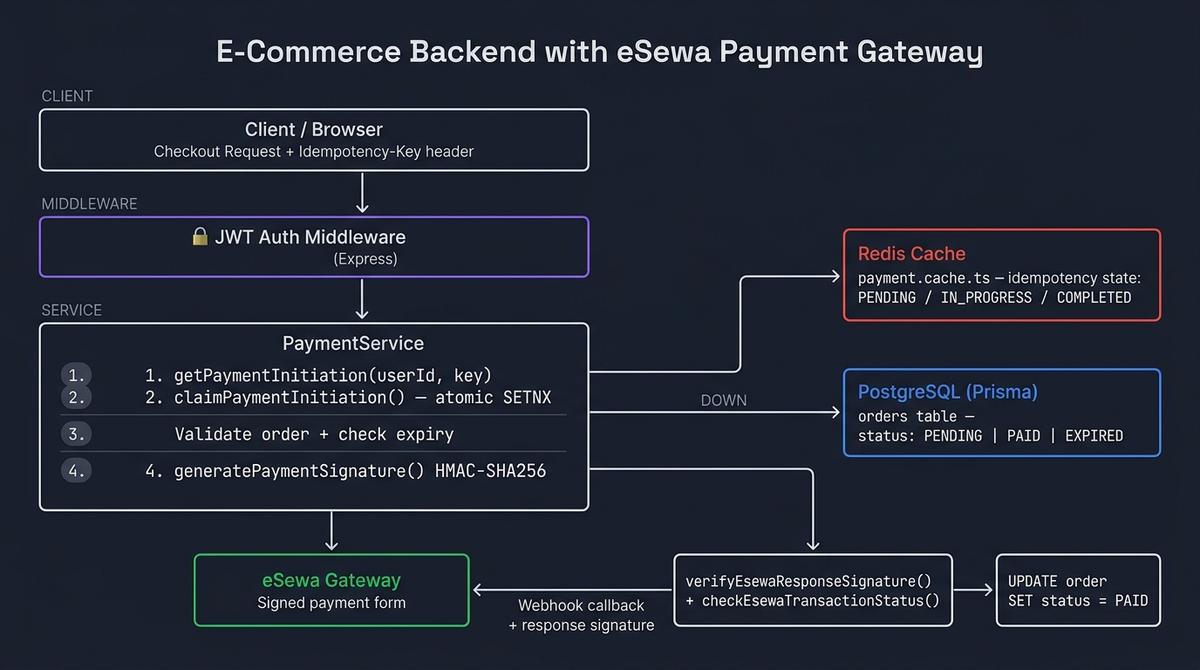
Ecommerce Backend system architecture: Client → Express API (Auth Middleware) → Payment Service (Idempotency Guard via Redis cache) → Prisma / PostgreSQL → eSewa Gateway → Webhook → Prisma update
Payments & APICompleted2025

E-Commerce Payment Backend

Production-grade REST API with eSewa payment integration, idempotency-safe checkout, Redis-backed concurrency guards, and structured observability.

A fully typed Express.js backend for an e-commerce platform, built with careful attention to payment correctness. The core engineering challenge was ensuring that eSewa checkout requests are safe against duplicate submissions, race conditions, and partial-failure states — all without distributed transactions.
TypeScriptNode.jsExpressPostgreSQLPrisma+2 more
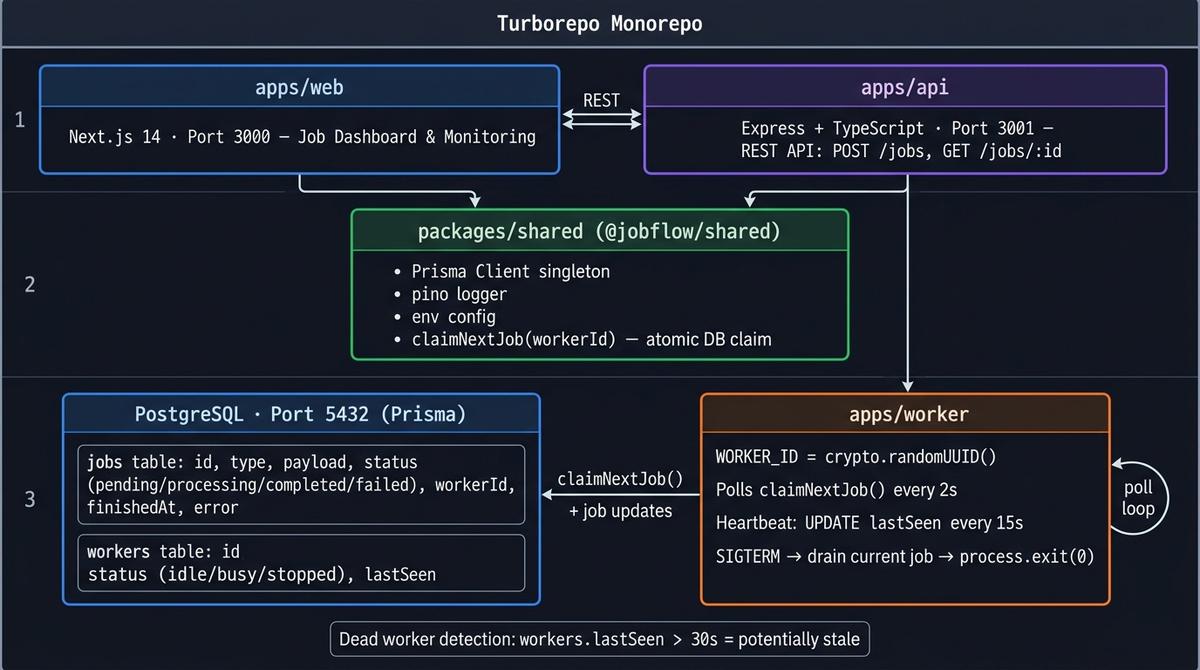
JobFlow system architecture: Next.js web (port 3000) + Express API (port 3001) → PostgreSQL via Prisma (jobs + workers tables) → Worker process polls claimNextJob() → executes → updates job status; heartbeat updates worker.lastSeen every 15s
Distributed SystemsCompleted2025

JobFlow — Distributed Worker Platform

Turborepo monorepo with a polling-based distributed job processor, PostgreSQL-backed worker registry, heartbeat monitoring, and graceful shutdown with SIGTERM draining.

A production-scaffolded distributed background job processing platform built as a Turborepo monorepo. The system separates concerns cleanly between a REST API (job submission), a Next.js dashboard (job monitoring), and an autonomous worker process (job execution) — all sharing types and database access through a shared package. The worker implements heartbeat-based liveness tracking and zero-loss graceful shutdown.

TypeScriptNode.jsExpressNext.jsPostgreSQL+3 more
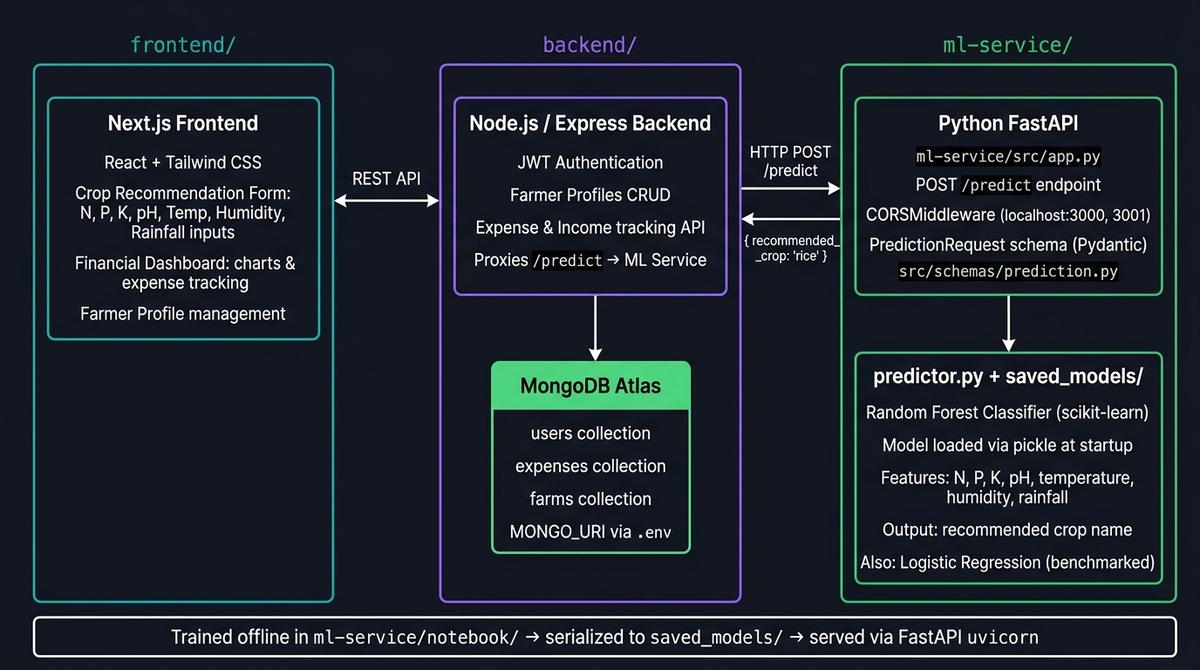
Crop Recommendation System: Next.js Frontend → Node.js Backend (JWT auth, expense CRUD, MongoDB) → FastAPI ML microservice (port via app.py) → Scikit-learn Random Forest (pickle model) → JSON prediction response
Machine Learning & Full-StackCompleted2024

Crop Recommendation System

Full-stack agricultural decision support platform with a FastAPI ML microservice, scikit-learn Random Forest classifier, and a Node.js backend for farmer expense tracking.

A comprehensive full-stack application built for Nepali farmers that combines ML-driven crop recommendations with a financial tracking dashboard. The system is split into three distinct services: a Next.js frontend, a Node.js/MongoDB backend for user accounts and farm expense management, and a Python FastAPI microservice that serves predictions from a trained scikit-learn Random Forest classifier.

PythonFastAPIscikit-learnNode.jsExpress+4 more